
· fatherhood · psychology · bonding
The Day I Became a Father, the Bond Wasn't There Yet — and That's Normal
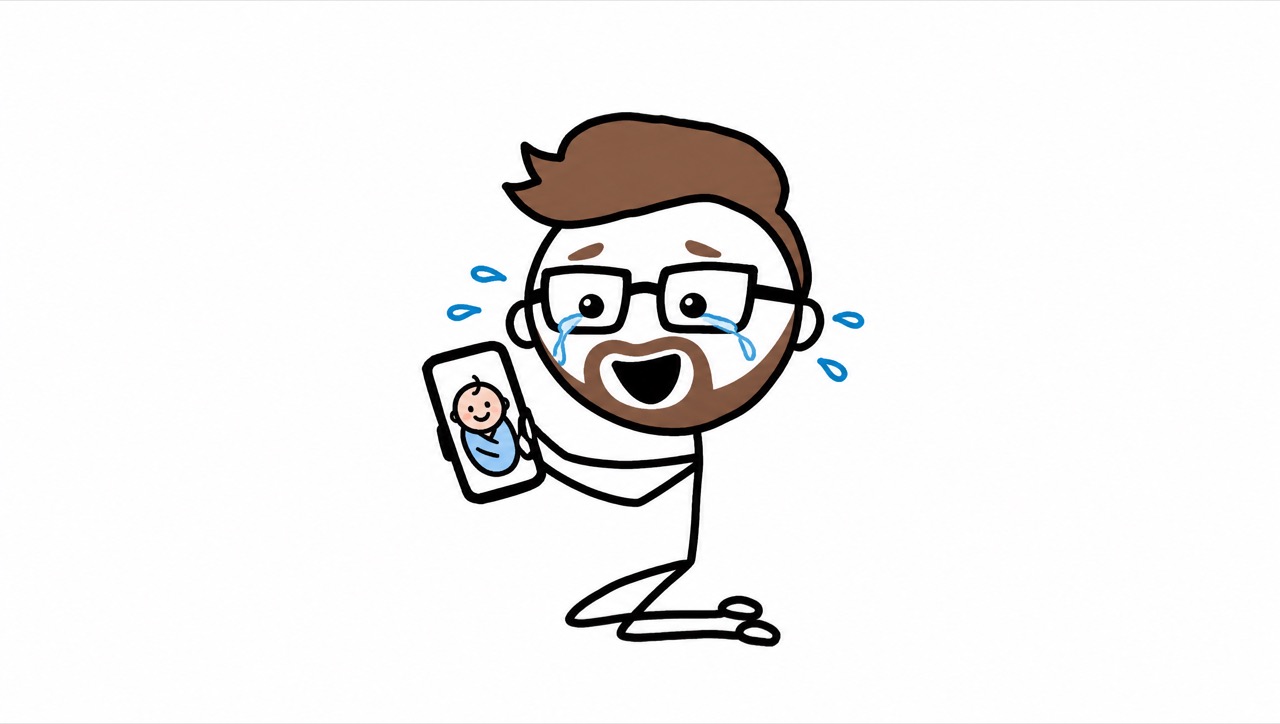
I want to start with the moment nobody prepares you for, because I lived it.
When my son arrived, I was the happiest man alive. My wife sent me the first picture and I dropped to my knees and cried. Real tears, lots of them. And tangled up inside that joy was something else, something I didn’t have words for at the time: the floor opening under me. My whole life just changed. Forever.
Here’s the part I’ve never heard a dad say out loud: the overwhelming, magical bond everyone promised — it wasn’t there yet. My wife had nine months of hormones, kicks and shared blood to grow hers. I had a photo on a phone and a brand-new job title. What I felt was enormous. What I didn’t feel yet was connection.
For weeks I quietly wondered if something was wrong with me. It turns out the science has a very clear answer, and I wish someone had handed it to me in that hospital corridor.
The bond isn’t issued at birth. It’s accumulated.
A mother’s biology gets a nine-month head start — pregnancy and birth physically prepare her brain and body for the baby. A father’s biology waits for something different: contact.
A series of Israeli studies led by neuroscientist Ruth Feldman measured oxytocin — the bonding hormone — in new parents. In one study of 160 first-time mothers and fathers (Gordon and colleagues, 2010, in Biological Psychiatry), fathers’ oxytocin levels were just as high as mothers’ — no difference. But the trigger was different. Mothers’ oxytocin rose with affectionate contact: cuddling, soft voices. Fathers’ oxytocin rose with stimulatory play — the tossing, the tickling, the physical stuff dads seem to drift toward without being told.
The machinery is the same. The switch is different. Hers was flipped by gestation. Mine could only be flipped by holding, changing, carrying, playing — by doing the job. On day one, I hadn’t done any of it yet. Nothing was missing in me. Nothing had started in me.
The most beautiful evidence comes from families with no mother at all
The study that finally put my delivery-room feeling to rest is Abraham, Feldman and colleagues, 2014, in PNAS. Researchers scanned 89 first-time parents, including 48 gay fathers raising babies with no maternal involvement — no pregnancy, no birth, no breastfeeding anywhere in the house.
In mothers, a deep alarm-and-attachment region called the amygdala lights up powerfully for their baby. In fathers who were secondary caregivers, it was quieter. But in the primary-caregiving fathers, the amygdala activated like a mother’s who gave birth. Caregiving alone produced it. And across all the fathers in the study, the more time a man spent in hands-on care, the more connected these brain systems became.
One honest caveat, because that’s how we do things here: this is one influential study, it measured brain activity rather than structure, and the caregiving link is correlational. But its direction matches everything else in this field: the father’s bond is built by the hands, not the womb.
What I’d tell the man in that corridor
If you’re standing where I stood — smiling for everyone, quietly wondering why the lightning hasn’t struck — here’s what I’d say.
A 2023 study that actually interviewed first-time fathers found the same story again and again: the bond is constructed gradually, through care, as the baby slowly starts responding to you. It’s not a lightning strike. It’s a slow sunrise. I’ve written more about that strange early stretch — the one where the baby feels like a loud little stranger — because it deserves its own honest telling.
Every nappy, every 3 a.m. hold, every ridiculous game of airplane is not just childcare. It is, quite literally, the mechanism. The bond you’re waiting for is on the other side of the work you’re about to do.
Mine arrived. It always does, if you keep showing up. And when it did, it was bigger than anything the delivery-room version of me could have imagined.
Watch the video version: I Became a Dad and Felt Lost. Here’s Why. — the same story, told out loud, in crayon.
I take apart one big question like this every week, honestly and in crayon — the video side lives on YouTube, and if this kind of honesty is your thing, subscribe and the next one will find you.