
· fatherhood · brain science · neuroscience
The Dad Brain Is Real: Fatherhood Physically Reshapes Your Head
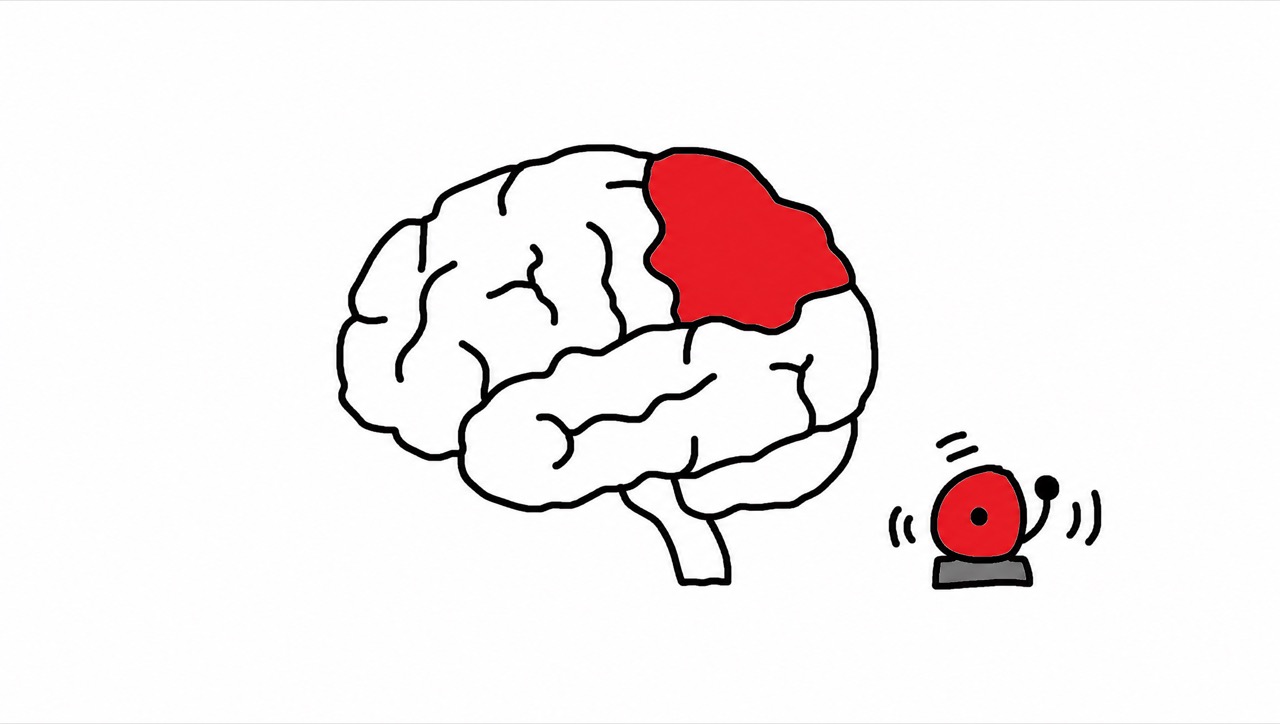
“Mom brain” gets all the press. It turns out dads don’t escape either — the scanner says so.
When my son was born, I felt like a different person within months. Not poetically different. Mechanically different: what grabbed my attention, what woke me at night, what I daydreamed about. I assumed that was just life rearranging my priorities. Then I found the studies suggesting my brain had been rearranged too.
Two continents, same result
The strongest evidence is Martínez-García, Saxbe, Carmona and colleagues, 2023, in Cerebral Cortex. Researchers scanned first-time fathers before and after their child’s birth in two completely separate samples — 20 men in Spain, 20 in California, different scanners, different timelines — plus childless controls.
Both groups of new fathers showed the same thing: a small but measurable reduction in cortical grey-matter volume — about 1 percent — concentrated in the default mode network. That’s the brain system that hums when you’re thinking about yourself: your plans, your daydreams, your inner monologue.
Read that again. The part of a new father’s brain that quietly reorganizes is the part in charge of thinking about himself. I have never felt more seen by a piece of neuroscience.
The researchers’ interpretation — and they’re careful to call it a hypothesis, so I will be too — is that this looks like refinement, not damage. The same kind of pruning a teenager’s brain does when it specializes. The father’s brain may be trimming itself for a new job.
What might be growing
An earlier, smaller study (Kim and colleagues, 2014, in Social Neuroscience) scanned 16 fathers twice in the first four months and found grey matter increasing in regions tied to parental motivation — hypothalamus, amygdala, striatum — while other regions decreased. And in a 2023 study of 38 new fathers (Saxbe and colleagues, Journal of Neuroendocrinology), men whose left hippocampus grew after the birth reported stronger bonds with their baby and less parenting stress — and had higher oxytocin during the pregnancy.
Which regions shrink and which grow is genuinely not settled — these samples are tiny, one study had no control group, and the field is young. What’s becoming hard to dismiss is the headline: the transition to fatherhood leaves physical traces in the brain.
The part that isn’t about anatomy
Here’s the finding I keep coming back to. In the 2014 PNAS study I covered in the bonding post, the fathers whose brains responded most like mothers’ weren’t a special breed of man. They were simply the ones doing the most hands-on care. The brain followed the behavior.
That means the “dad brain” isn’t something that happens to you in the delivery room. It’s something you build, hold by hold, night by night. The hardware updates itself with use.
So when a new father tells me he doesn’t feel like himself anymore — foggier about his old obsessions, absurdly alert to small sounds, oddly emotional at nappy adverts — I don’t tell him he’s imagining it. I tell him the truth: he’s not losing his mind. He’s renovating it. And the science, young as it is, suggests the renovation is the point.
Watch the video version: I Became a Dad and Felt Lost. Here’s Why. — the same story, told out loud, in crayon.
I take apart one big question like this every week, honestly and in crayon — subscribe on YouTube if you want the next one to find you.